How to calculate production capacity of paper cup machines?

Time:2026-05-22 Author:Isabella
0%

In the competitive world of paper cup manufacturing, understanding "how to calculate production capacity of paper cup machines" is crucial. Accurate capacity calculations influence production efficiency and profitability. According to industry reports, paper cup consumption is projected to reach 300 billion units by 2025, illustrating the significant demand for efficient production processes.

To optimize operations, manufacturers must evaluate machine speed, downtime, and operational efficiency. For example, high-speed machines can produce up to 180 cups per minute. However, variables like maintenance needs and labor shifts complicate these calculations. Not all machines operate at peak efficiency, which can lead to production discrepancies.

Any miscalculation can result in lost opportunities in this booming market. Thus, understanding these calculations is essential for strategic decision-making. While many resources provide data, businesses must ensure they rely on authoritative sources and real-world data. Reflecting on the nuances of capacity assessment is key to staying ahead.
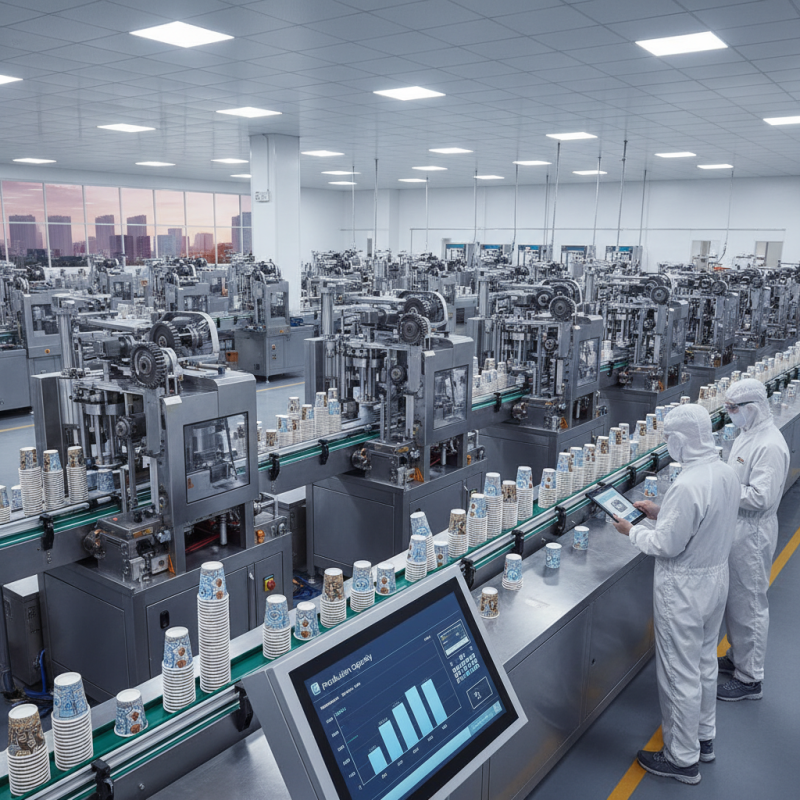
How to calculate production capacity of paper cup machines?

Understanding Production Capacity in Paper Cup Manufacturing

Understanding production capacity in paper cup manufacturing involves several key factors. The first is the efficiency of the machine. Machines can have varying speeds depending on design and technology. A machine producing 80 cups per minute may experience fluctuations based on maintenance or setup issues. These variables can impact the overall output.

Another important aspect is the workforce. Skilled operators are essential for achieving optimal production levels. Their expertise affects how quickly and effectively the machine runs. For instance, if an operator is not well-trained, machine downtime can increase. This delay ultimately reduces the number of cups produced in a given period.

Raw material quality also plays a critical role. High-quality paper ensures that production runs smoothly, while inferior materials might lead to defects. Frequent quality checks can prevent waste but might slow down the process. Balancing speed and quality is a challenge that manufacturers often face. Monitoring these elements continuously will help in calculating accurate production capacity.

Key Factors Influencing Paper Cup Machine Capacity

When calculating the production capacity of paper cup machines, several key factors come into play. The machine's speed is crucial. Commonly, high-speed machines can produce up to 200 cups per minute. For larger operations, this can mean millions of cups each month. However, the actual output may vary based on maintenance and operational efficiency. An inefficiency rate of around 10-15% is typical in many factories, which affects the final numbers.

Another important factor is the cup design. Different sizes, shapes, and materials can influence the production line's dynamics. For instance, a complex design might slow down the process. Reports indicate that machines specifically optimized for standard sizes often have better output compared to those handling diverse requirements. Moreover, downtime and machine wear can further impact the capacity. Setting up proper maintenance schedules is essential to avoid unexpected halts.

Worker efficiency also plays a role. The skill level of the operators can significantly affect productivity. Trained personnel tend to maintain higher standards of quality while ensuring speed. As noted in industry reports, investing in workforce training can yield better output, often resulting in a 15-20% increase in overall capacity. Balancing these factors is crucial for an optimal production capacity in the paper cup manufacturing process.

Calculating Theoretical Output of Paper Cup Machines

To calculate the theoretical output of paper cup machines, one needs to consider various factors. The machine's speed is crucial. Most machines operate based on a specific production rate, typically measured in cups per minute. Understanding the machine's orientation and efficiency helps in estimating output.

Tips: Regular maintenance plays a vital role. Dirty or worn parts can slow down production. Set a clear schedule for inspections to avoid unexpected downtimes.

Next, the design of the paper cups also influences total output. Complex designs may require more time to produce, reducing the number of units finished in a set timeframe. It's essential to balance design intricacy with production capacity.

Tips: Test different designs on a smaller scale. Collect data on time taken and adjust your approach accordingly. Reflections on past production levels can guide better decision-making in the future.

Adjusting Capacity Based on Variability in Production Conditions

Calculating the production capacity of paper cup machines requires understanding various factors. Variability in production conditions plays a significant role. Factors like raw material quality, machine settings, and operator skill can affect output.

Reports suggest that a typical paper cup machine has a capacity of 50-100 cups per minute under ideal conditions. However, when production conditions vary, this number can drop significantly. For example, if the paper quality is inconsistent, the machine may face jams or require adjustments, reducing efficiency.

Adjusting capacity based on these variables is crucial. Industry experts recommend conducting regular maintenance checks and training for operators. Inconsistent training can lead to mishaps on the line. Organizations might also benefit from using analytics to track production output. The data can highlight patterns, guiding adjustments. This approach fosters resilience in production processes. However, recognizing limitations in capacity is essential for realistic planning and forecasting.

Evaluating Efficiency and Downtime in Paper Cup Production

Evaluating the efficiency and downtime in paper cup production is crucial for optimizing output. Identifying the sources of inefficiency can significantly enhance productivity. Common issues include machine malfunctions, delays in material supply, and operator errors. Each factor impacts the overall production rate, resulting in higher costs and reduced profitability.

To improve efficiency, consider conducting regular maintenance on machinery. This minimizes unexpected breakdowns that can halt production. Keep a close watch on operator training. Well-trained staff are less likely to make mistakes that lead to downtime. Monitoring the supply chain is also vital. Delays in materials can create bottlenecks.

Tips: Identify specific downtime causes with a thorough analysis. Track how long machines are running versus when they are not. This data provides insights for targeted improvements. Encourage team feedback on process inefficiencies. They often have valuable suggestions.

Evaluating efficiency is an ongoing process, not a one-time task. Regularly review production data and adjust as needed. Recognize that even small changes can lead to significant improvements over time. Embrace a culture of continuous improvement to stay competitive in the market.

FAQS

: What factors influence production capacity in paper cup manufacturing?

: Key factors include machine efficiency, workforce skill levels, and raw material quality.

How does machine speed affect output?

Machine speed determines production rate but can fluctuate due to maintenance or setup issues.

Why is workforce skill important?

Skilled operators ensure optimal machine performance, reducing potential downtime that affects production.

How does raw material quality impact production?

High-quality materials lead to smoother production, while inferior ones can cause defects and waste.

What role does maintenance play in production efficiency?

Regular maintenance helps prevent breakdowns, ensuring machines operate consistently and effectively.

How can cup design affect production output?

Complex designs may take longer to produce, reducing the number of cups made in a given time.

What should be done to identify downtime causes?

Conduct thorough analyses to track machine operation times and gather staff feedback on inefficiencies.

Is evaluating efficiency a one-time task?

No, it is an ongoing process that requires regular reviews and adjustments to improve productivity.

How can testing new designs help?

Testing designs on a smaller scale allows for data collection which can inform better production strategies.

What mindset should manufacturers adopt for continuous improvement?

Embrace a culture of ongoing assessment and changes, recognizing that even small improvements matter.

Conclusion

Calculating the production capacity of paper cup machines is essential for optimizing manufacturing operations. This process begins with understanding the fundamental components of production capacity in paper cup manufacturing, which involves examining factors such as machine specifications, operational speed, and material availability. Key elements that influence machine capacity include the design of the paper cup, the complexity of the production process, and the quality control measures in place.

To determine the theoretical output of paper cup machines, manufacturers must analyze various metrics and operational conditions, adjusting calculations based on variability that can affect efficiency. Additionally, evaluating efficiency and accounting for downtime are critical in achieving a realistic assessment of production capacity. By mastering how to calculate production capacity of paper cup machines, manufacturers can effectively enhance productivity and reduce waste, leading to improved operational success.

Isabella

Isabella

Isabella is a dedicated marketing professional with a sharp focus on driving brand growth and engagement through strategic content creation. With an extensive background in digital marketing, she combines her passion for storytelling with her keen understanding of industry trends to deliver......